Back to Upper Intermediate (B2) stories

Unlock the Complete Learning Experience

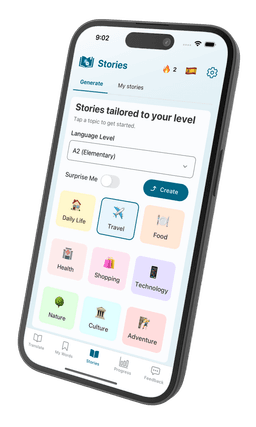
You're reading free stories on our website. Get the mobile app for audio narration, speaking practice, vocabulary saving, personalised stories, instant translations, and progress tracking.

Download on the App StoreGet it on Google Play
Audio
Translations
Progress

Η περιπέτεια της Άννας στο βουνό

Upper Intermediate (B2)
5 min read

📖 You are reading the free text version. Get our mobile app for 🎧 audio narration, 💬 speaking practice, 🔄 instant translations, and 💾 vocabulary saving to enhance your learning experience.

Η Άννα είχε πάντα μεγάλη αγάπη για τη φύση. Ένα Σαββατοκύριακο αποφάσισε να πάει μεμονωμένη πεζοπορία στο βουνό κοντά στο χωριό της.

Καθώς ανέβαινε το μονοπάτι, ο καιρός άρχισε να αλλάζει ξαφνικά. Ο ουρανός γέμισε σύννεφα και η βροχή ξεκίνησε έντονη. Η Άννα δεν είχε προετοιμαστεί σωστά για την κακοκαιρία.

Παρά την αυξανόμενη βροχή, συνέχισε να προχωρά, ψάχνοντας καταφύγιο. Βρήκε μια μικρή σπηλιά και μπήκε μέσα για να προστατευτεί από τη βροχή.

Καθώς περίμενε, πρόσεξε κάτι ασυνήθιστο: ένα φωτεινό μικρό φως μέσα στη σπηλιά που έμοιαζε με έναν πολύχρωμο μικρό κρύσταλλο.

Η Άννα πήρε το φως μαζί της, πιστεύοντας πως ήταν κάτι σπάνιο και πολύ όμορφο. Όταν η βροχή σταμάτησε, κατευθύνθηκε πίσω στο χωριό με τον κρύσταλλο.

Την επόμενη μέρα, ένας ντόπιος γεωλόγος είδε τον κρύσταλλο και της εξήγησε πως ήταν ένας σπάνιος ορυκτός σχηματισμός που μπορούσε να βοηθήσει στην κατανόηση του γεωλογικού παρελθόντος της περιοχής.

Η Άννα αποφάσισε να δωρίσει τον κρύσταλλο στο τοπικό μουσείο, όπου πολλοί άνθρωποι θα μπορούσαν να μάθουν για τη φύση και την ιστορία του βουνού. Έτσι, η απρόβλεπτη πεζοπορία της έφερε γνώση και ενδιαφέρον για το περιβάλλον στη κοινότητα της.


Practise this Greek story

Vocabulary in context

Important words and phrases

  • αποφάσισε να πάει

    verb phrase

    Romanization: apofasise na pai

    decided to go

    Η Μαρία αποφάσισε να πάει μόνη της στο βουνό.

    Maria decided to go to the mountain alone.

  • ο καιρός άρχισε να αλλάζει ξαφνικά

    verb phrase

    Romanization: o kairos arxise na allazei xafnika

    the weather started to change suddenly

    Ο καιρός άρχισε να αλλάζει ξαφνικά και οι πεζοπόροι γύρισαν πίσω.

    The weather started to change suddenly, and the hikers turned back.

  • κακοκαιρία

    noun

    Romanization: kakokairia

    bad weather

    Η κακοκαιρία κράτησε όλη τη νύχτα.

    The bad weather lasted all night.

  • παρά την αυξανόμενη βροχή

    prepositional phrase

    Romanization: para tin afxanomeni vroxi

    despite the increasing rain

    Παρά την αυξανόμενη βροχή, συνέχισε να περπατά.

    Despite the increasing rain, she kept walking.

  • καταφύγιο

    noun

    Romanization: katafygio

    shelter

    Βρήκαν καταφύγιο κάτω από μια μεγάλη βεράντα.

    They found shelter under a large veranda.

  • πρόσεξε κάτι ασυνήθιστο

    verb phrase

    Romanization: prosexe kati asynithisto

    noticed something unusual

    Πρόσεξε κάτι ασυνήθιστο στο παράθυρο.

    She noticed something unusual in the window.

  • ένας σπάνιος ορυκτός σχηματισμός

    noun phrase

    Romanization: enas spanios oryktos schimatismos

    a rare mineral formation

    Στο σπήλαιο βρέθηκε ένας σπάνιος ορυκτός σχηματισμός.

    A rare mineral formation was found in the cave.

  • του γεωλογικού παρελθόντος

    noun phrase

    Romanization: tou geologikou parelthontos

    of the geological past

    Τα απολιθώματα βοηθούν στην κατανόηση του γεωλογικού παρελθόντος μιας περιοχής.

    Fossils help us understand a region's geological past.

  • κατευθύνθηκε πίσω

    verb phrase

    Romanization: katefthynthike piso

    headed back

    Μετά το μάθημα, κατευθύνθηκε πίσω στο σπίτι.

    After class, she headed back home.

  • το τοπικό μουσείο

    noun phrase

    Romanization: to topiko mouseio

    the local museum

    Το τοπικό μουσείο οργανώνει εκπαιδευτικές επισκέψεις.

    The local museum organizes educational visits.

Check your understanding

Comprehension questions

Choose an answer, check it, then move to the next question.

Question 1 of 3

  1. Question 1: current not answered
  2. Question 2: not answered
  3. Question 3: not answered
Γιατί μπήκε η Άννα στη σπηλιά;Why did Anna go into the cave?

Notice the language

Language notes

usage

Παρά την + ονοματική φράση

Use παρά + a noun phrase to mean "despite." It introduces a contrast: something happens even though another situation is true. This pattern is very reusable in descriptions and narratives. Example: "Παρά την αυξανόμενη βροχή, συνέχισε να προχωρά." = "Despite the increasing rain, she kept going."

  • Παρά την αυξανόμενη βροχή, συνέχισε να προχωρά.

    Despite the increasing rain, she kept going.

Keep reading

More Upper Intermediate (B2) Stories
GreekUpper Intermediate (B2)