
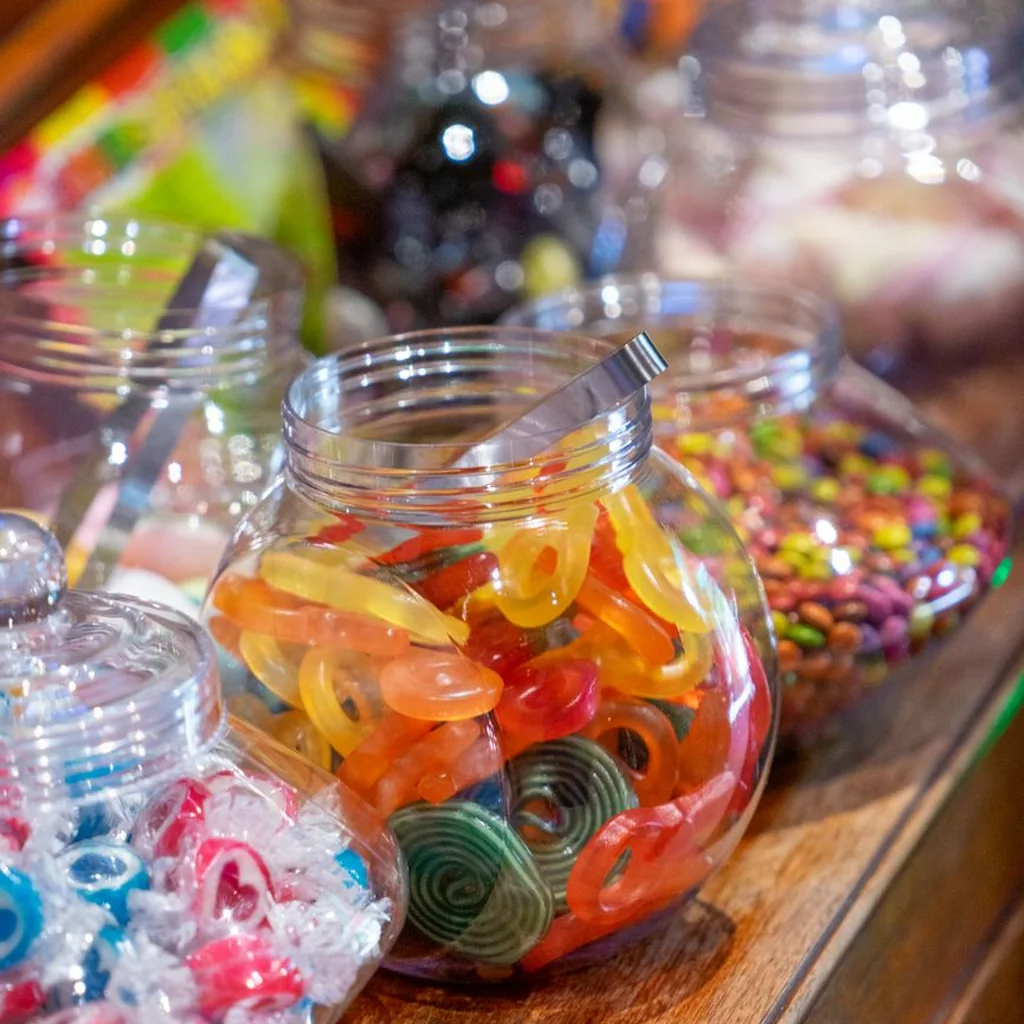
Photo: Oliver Schröder on Pexels
Das Bonbonglas
The Candy Jar
In his grandmother’s kitchen, Felix may choose one piece of candy from her jar but cannot decide which one to take.
Three short parts. Read each part in German first; tap “Show English” under a paragraph when you need the translation.


Part 1
Felix stand auf einem Stuhl in der Küche und schaute in das große Bonbonglas. Es gehörte seiner Oma und stand normalerweise ganz oben im Schrank.
Show EnglishHide English
Felix stood on a chair in the kitchen and looked into the big candy jar. It belonged to his grandmother and normally stood at the very top of the cupboard.
Heute hatte sie es für ihn heruntergeholt. „Du darfst dir ein Bonbon aussuchen“, sagte sie. „Eins aus dem ganzen Glas.“
Show EnglishHide English
Today she had taken it down for him. “You may choose one piece of candy,” she said. “One from the whole jar.”
Felix schob den Deckel zur Seite. Zwischen roten und gelben Bonbons lagen grüne Frösche aus Fruchtgummi, kleine Schokoladenkugeln und runde Karamellbonbons.
Show EnglishHide English
Felix slid the lid aside. Among the red and yellow candies were green gummy frogs, little chocolate balls, and round caramels.
Er nahm einen grünen Frosch heraus und hielt ihn gegen das Licht. „Schmeckt der nach Apfel?“
Show EnglishHide English
He took out a green frog and held it up to the light. “Does it taste like apple?”
„Ich glaube schon“, sagte Oma. „Aber ich habe noch keinen probiert.“
Show EnglishHide English
“I think so,” Grandma said. “But I haven’t tried one yet.”
Felix legte den Frosch zurück. Wenn er nach Apfel schmeckte, war er sicher gut. Aber wenn nicht, hatte Felix sich vielleicht für etwas entschieden, das er gar nicht mochte.
Show EnglishHide English
Felix put the frog back. If it tasted like apple, it was sure to be good. But if it didn’t, Felix might have chosen something he didn’t like at all.
Oma stellte zwei Tassen auf den Tisch und setzte sich. Felix nahm eine Schokoladenkugel in die Hand, dann ein Karamellbonbon. Schließlich hielt er in jeder Hand eine Süßigkeit.
Show EnglishHide English
Grandma put two cups on the table and sat down. Felix picked up a chocolate ball, then a caramel. At last, he was holding a sweet in each hand.
„Welches würdest du nehmen?“, fragte er.
Show EnglishHide English
“Which one would you choose?” he asked.
Oma lächelte. „Das Karamellbonbon. Ich mag es, wenn es langsam im Mund weich wird.“
Show EnglishHide English
Grandma smiled. “The caramel. I like it when it slowly softens in my mouth.”
Felix betrachtete beide. Ein Bonbon, das langsam weich wurde, klang gut, aber Schokolade mochte er auch. Gerade wollte er eine Münze holen und das Los entscheiden lassen, da entdeckte er unter den Fröschen eine kleine, blau eingewickelte Süßigkeit.
Show EnglishHide English
Felix looked at both of them. A candy that slowly softened sounded good, but he liked chocolate too. Just as he was about to get a coin and let chance decide, he spotted a small, blue-wrapped sweet beneath the frogs.
Part 2Die Entscheidung am Teetisch(The Decision at the Tea Table)
Felix legte die beiden Süßigkeiten zurück und zog das blaue Päckchen heraus. Auf dem Papier war eine Zitrone zu sehen, und darunter stand „sauer“.
Show EnglishHide English
Felix put the two sweets back and pulled out the blue packet. There was a lemon on the wrapper, and underneath it was the word “sour.”
„Ist das sehr sauer?“, fragte er und drehte es zwischen den Fingern.
Show EnglishHide English
“Is it very sour?” he asked, turning it between his fingers.
Oma nickte. „Am Anfang ziemlich. Danach wird es süß.“
Show EnglishHide English
Grandma nodded. “Quite sour at first. Then it gets sweet.”
Felix verzog schon beim Gedanken daran das Gesicht. Trotzdem setzte er sich neben sie und legte das Zitronenbonbon auf den Tisch. Er mochte saure Sachen, solange sie nicht zu sauer waren.
Show EnglishHide English
Felix made a face just thinking about it. Still, he sat down beside her and put the lemon candy on the table. He liked sour things, as long as they weren’t too sour.
„Kannst du dich jetzt entscheiden?“, fragte Oma und schob ihm seine Tasse hin.
Show EnglishHide English
“Can you decide now?” Grandma asked, pushing his cup toward him.
„Fast.“ Felix stand wieder auf und holte noch einmal den grünen Frosch und die Schokoladenkugel aus dem Glas. Er legte sie neben das blaue Päckchen.
Show EnglishHide English
“Almost.” Felix stood up again and took the green frog and the chocolate ball out of the jar once more. He put them beside the blue packet.
Oma trank einen Schluck Tee. „Du hast drei sehr gute Möglichkeiten.“
Show EnglishHide English
Grandma took a sip of tea. “You have three very good options.”
„Das hilft mir nicht“, sagte Felix. Oma lachte, und nach einem Moment musste er auch lachen.
Show EnglishHide English
“That doesn’t help me,” Felix said. Grandma laughed, and after a moment he had to laugh too.
Er schloss die Augen und zeigte auf den Tisch. Sein Finger landete auf der Schokoladenkugel. Er öffnete die Augen und war enttäuscht.
Show EnglishHide English
He closed his eyes and pointed at the table. His finger landed on the chocolate ball. He opened his eyes and felt disappointed.
„Dann willst du wohl keine Schokolade“, sagte Oma.
Show EnglishHide English
“Then I suppose you don’t want chocolate,” Grandma said.
Felix nickte überrascht. Er legte die Kugel zurück und sah den Frosch und das Zitronenbonbon an. Dann bemerkte er auf der blauen Verpackung ein kleines Loch. „Ist das Papier kaputt?“, fragte er.
Show EnglishHide English
Felix nodded, surprised. He put the ball back and looked at the frog and the lemon candy. Then he noticed a small hole in the blue wrapper. “Is the paper torn?” he asked.
Part 3Der grüne Frosch(The Green Frog)
Oma nahm das blaue Päckchen in die Hand und sah es sich an. „Ja, es hat ein kleines Loch. Das Bonbon ist zwar noch eingewickelt, aber ich gebe dir lieber ein anderes.“
Show EnglishHide English
Grandma picked up the blue packet and examined it. “Yes, it has a small hole. The candy is still wrapped, but I’d rather give you a different one.”
Sie legte das beschädigte Bonbon beiseite, stellte das Glas zwischen sich und Felix und suchte mit ihm nach einem zweiten Zitronenbonbon. Unter den Schokoladenkugeln lag tatsächlich noch eins, dessen Papier ganz war.
Show EnglishHide English
She set the damaged candy aside, placed the jar between herself and Felix, and helped him look for a second lemon candy. There really was another one under the chocolate balls, with its wrapper intact.
Felix legte es neben den grünen Frosch. Diesmal schloss er nicht die Augen. Er nahm erst den Frosch hoch, dann das Zitronenbonbon und las noch einmal das Wort „sauer“ auf der Verpackung.
Show EnglishHide English
Felix put it beside the green frog. This time, he didn’t close his eyes. First he picked up the frog, then the lemon candy, and read the word “sour” on the wrapper again.
„Ich glaube, ich will den Frosch“, sagte er. „Bei dem weiß ich wenigstens, dass er nicht sauer ist.“
Show EnglishHide English
“I think I want the frog,” he said. “At least I know it isn’t sour.”
„Dann ist er deiner“, sagte Oma.
Show EnglishHide English
“Then it’s yours,” Grandma said.
Felix biss dem Frosch vorsichtig ein Bein ab und kaute. Er schmeckte nach Apfel, so wie Oma vermutet hatte. Felix grinste und aß auch den Rest.
Show EnglishHide English
Felix carefully bit off one of the frog’s legs and chewed. It tasted like apple, just as Grandma had guessed. Felix grinned and ate the rest too.
„Eine gute Wahl?“, fragte Oma.
Show EnglishHide English
“A good choice?” Grandma asked.
„Ja. Aber beim nächsten Mal nehme ich vielleicht Zitrone.“
Show EnglishHide English
“Yes. But next time, maybe I’ll choose lemon.”
Er legte das unbeschädigte Zitronenbonbon zurück ins Glas und schraubte den Deckel zu. Oma stellte das Glas wieder in den Schrank, während Felix seinen Stuhl an den Tisch schob.
Show EnglishHide English
He put the undamaged lemon candy back in the jar and screwed the lid on. Grandma put the jar back in the cupboard while Felix pushed his chair up to the table.
Sie tranken ihren Tee. Als Oma die Tassen später in die Spüle stellte, entdeckte Felix noch einen grünen Zuckerkrümel auf dem Tisch und hob ihn mit dem Finger auf.
Show EnglishHide English
They drank their tea. Later, when Grandma put the cups in the sink, Felix spotted one more green sugar crumb on the table and picked it up with his finger.
Practise this German story
Vocabulary in context
Important words and phrases
sich ein Bonbon aussuchen
verb phraseto choose a candy for oneself
Jedes Kind durfte sich ein Stück Kuchen aussuchen.
Each child was allowed to choose a piece of cake.
herunterholen
verbto bring down; get down from a higher place
Kannst du die Kiste bitte vom Regal herunterholen?
Can you please bring the box down from the shelf?
den Deckel zur Seite schieben
verb phraseto push the lid to the side
Sie schob den Deckel zur Seite und roch an der Suppe.
She pushed the lid to the side and smelled the soup.
gegen das Licht halten
verb phraseto hold up against the light
Halte die Flasche gegen das Licht, dann siehst du sie besser.
Hold the bottle up against the light, then you can see it better.
langsam im Mund weich werden
verb phraseto slowly soften in the mouth
Diese Bonbons werden langsam im Mund weich.
These candies slowly soften in the mouth.
sich für etwas entscheiden
verb phraseto decide on something
Ich habe mich für die Schokolade entschieden.
I decided on the chocolate.
das Gesicht verziehen
verb phraseto grimace
Bei dem bitteren Kaffee verzog er das Gesicht.
He grimaced at the bitter coffee.
beiseite legen
verb phraseto set aside
Leg die kaputte Tasse bitte beiseite.
Please set the broken cup aside.
ein kleines Loch haben
verb phraseto have a small hole
Mein Regenschirm hat ein kleines Loch.
My umbrella has a small hole.
etwas zurücklegen
verb phraseto put something back
Bitte leg das Buch wieder zurück ins Regal.
Please put the book back on the shelf.
Check your understanding
Comprehension questions
Choose an answer, check it, then move to the next question.
Question 1 of 3
- Question 1: current not answered
- Question 2: not answered
- Question 3: not answered
Notice the language
Language notes
solange + Nebensatz
Use 'solange' to say that something is true up to a limit or while a condition lasts. In the story, it appears in 'Er mochte saure Sachen, solange sie nicht zu sauer waren.' You can reuse it in sentences like: 'Du kannst hier bleiben, solange du leise bist.'
Du kannst hier bleiben, solange du leise bist.
You can stay here as long as you are quiet.
More German stories to read next

Der Yogakurs
The Yoga Class
Jana sits on a mat among eight other people in a yoga class, wondering whether a walk would have been enough.
Der Marienkäfer auf Niklas’ Finger
The Ladybird on Niklas’ Finger
In the garden, Niklas holds a ladybird on his finger and stays perfectly still, waiting to see whether it will fly or crawl.
Der erste Moment mit dem Baby
The First Moment with the Baby
Susanne is holding her newborn grandchild in her daughter Jana’s living room and is startled by how small and light he is.

Der letzte Punkt
The Final Point
At her club’s tennis tournament, Lena reaches the final and waits for Mia to serve the point that will decide who wins.