
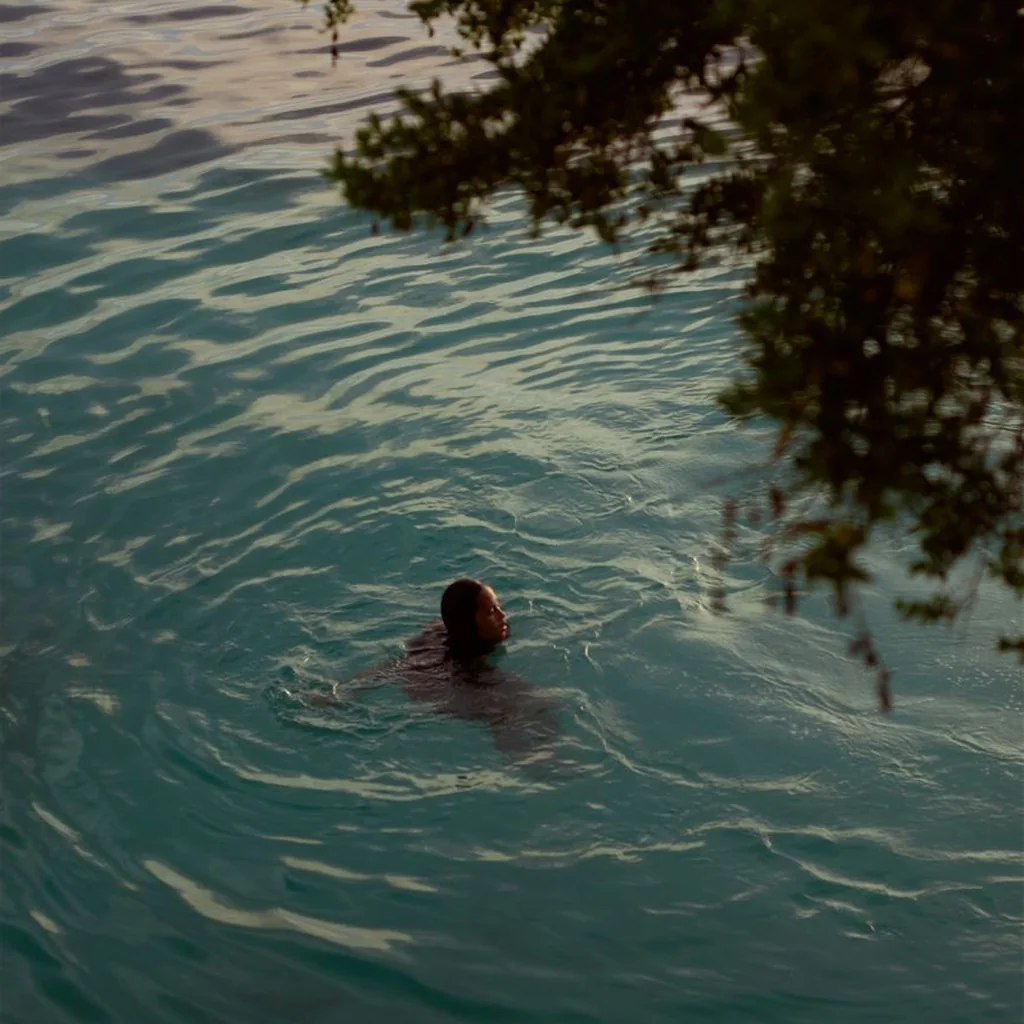
Photo: Jeff Vinluan on Pexels
Claras Schwimmen im See
Clara Swims in the Lake
Clara is alone at a calm lake on a warm afternoon, and the water suddenly turns very cold beneath her feet.
Three short parts. Read each part in German first; tap “Show English” under a paragraph when you need the translation.


Part 1
Clara ist allein am See. Es ist ein warmer Nachmittag, und das Wasser ist ganz ruhig. Ihre Schuhe und ihr Handtuch liegen am Ufer.
Show EnglishHide English
Clara is alone at the lake. It is a warm afternoon, and the water is very calm. Her shoes and towel are lying on the shore.
Langsam geht sie ins Wasser. Erst ist es kühl, aber nach ein paar Minuten fühlt es sich angenehm an. Clara schwimmt ein Stück vom Ufer weg.
Show EnglishHide English
She slowly walks into the water. At first it is cool, but after a few minutes it feels pleasant. Clara swims a little way from the shore.
Sie sieht die Bäume und den blauen Himmel. „Wie schön“, sagt sie leise. Dann legt sie sich auf den Rücken und schließt kurz die Augen.
Show EnglishHide English
She sees the trees and the blue sky. “How beautiful,” she says softly. Then she lies on her back and closes her eyes for a moment.
Plötzlich wird das Wasser unter ihren Füßen sehr kalt. Clara öffnet die Augen und zieht die Beine hoch. „Oh, das ist aber kalt!“
Show EnglishHide English
Suddenly the water beneath her feet becomes very cold. Clara opens her eyes and pulls her legs up. “Oh, that’s really cold!”
Schnell schwimmt sie ein kleines Stück zurück. Dort ist das Wasser wieder wärmer. Sie bleibt stehen und schaut über den See.
Show EnglishHide English
She quickly swims a little way back. There the water is warm again. She stops and looks across the lake.
Am Ufer sieht sie einen schmalen Bach. Sein Wasser fließt direkt in den See.
Show EnglishHide English
On the shore, she sees a narrow stream. Its water flows straight into the lake.
Part 2Clara und das kalte Wasser(Clara and the Cold Water)
Clara sieht zum Bach. Kommt das kalte Wasser von dort? Sie möchte es wissen und schwimmt langsam in seine Richtung.
Show EnglishHide English
Clara looks at the stream. Is the cold water coming from there? She wants to find out and slowly swims in its direction.
Bald spürt sie die Kälte wieder an den Füßen. Sie streckt einen Fuß tiefer ins Wasser und zieht ihn schnell zurück. „Ja, das ist wirklich kalt!“, sagt sie und lacht.
Show EnglishHide English
Soon she feels the cold on her feet again. She puts one foot deeper into the water and quickly pulls it back. “Yes, it really is cold!” she says, laughing.
Sie schwimmt weiter zum Ufer, bis sie stehen kann. Dort ist das Wasser am Bach noch kälter. Clara hält eine Hand hinein und nimmt sie gleich wieder heraus.
Show EnglishHide English
She keeps swimming toward the shore until she can stand. There, the water by the stream is even colder. Clara puts one hand in and immediately takes it out again.
„Jetzt aber zurück in die Sonne“, sagt sie. Sie geht am Ufer entlang zu ihren Schuhen und ihrem Handtuch. Ihre Schuhe stehen noch dort, aber das Handtuch liegt nicht mehr daneben.
Show EnglishHide English
“Now, back into the sun,” she says. She walks along the shore to her shoes and towel. Her shoes are still there, but the towel is no longer beside them.
Ein leichter Wind weht über den See. Clara sieht ihr Handtuch im Wasser. Es schwimmt langsam vom Ufer weg.
Show EnglishHide English
A light wind blows across the lake. Clara sees her towel in the water. It is slowly floating away from the shore.
Part 3Clara am See(Clara at the Lake)
Clara geht schnell ins Wasser und dem Handtuch nach. Das Wasser ist hier warm und reicht ihr nur bis zu den Knien. Sie streckt den Arm aus, aber das Handtuch ist noch zu weit weg.
Show EnglishHide English
Clara quickly goes into the water and follows the towel. The water is warm here and only reaches her knees. She reaches out her arm, but the towel is still too far away.
Also geht sie ein Stück weiter und nimmt es aus dem Wasser. Es ist ganz nass und schwer. Clara lacht. „Na gut, dann trockne ich eben in der Sonne.“
Show EnglishHide English
So she goes a little farther and takes it out of the water. It is completely wet and heavy. Clara laughs. “All right, then I’ll just dry off in the sun.”
Sie geht zurück ans Ufer und legt das Handtuch auf einen großen Stein. Dann setzt sie sich daneben ins Gras und streckt ihre Füße in die Sonne.
Show EnglishHide English
She goes back to the shore and puts the towel on a large stone. Then she sits beside it in the grass and stretches her feet into the sun.
Eine Weile schaut sie auf den See. Das Wasser ist wieder ganz ruhig. Am anderen Ufer stehen die Bäume, und der Bach fließt weiter in den See.
Show EnglishHide English
For a while, she looks at the lake. The water is very calm again. The trees stand on the opposite shore, and the stream keeps flowing into the lake.
Als Clara trocken ist, zieht sie ihre Schuhe an. Sie nimmt das nasse Handtuch mit und geht zufrieden nach Hause.
Show EnglishHide English
When Clara is dry, she puts on her shoes. She takes the wet towel with her and goes home, feeling pleased.
Practise this German story
Vocabulary in context
Important words and phrases
am See
phraseat the lake
Wir sind am See.
We are at the lake.
das Wasser
nounthe water
Das Wasser ist warm.
The water is warm.
warm
adjectivewarm
Das Wasser ist warm.
The water is warm.
das Ufer
nounthe shore
Wir sitzen am Ufer.
We are sitting on the shore.
schwimmen
verbto swim
Ich schwimme gern im See.
I like to swim in the lake.
kalt
adjectivecold
Das Wasser ist kalt.
The water is cold.
das Handtuch
nounthe towel
Das Handtuch ist nass.
The towel is wet.
nass
adjectivewet
Meine Schuhe sind nass.
My shoes are wet.
die Beine
nounthe legs
Ich hebe die Beine hoch.
I lift my legs up.
anziehen
verbto put on
Ich ziehe meine Schuhe an.
I put on my shoes.
Check your understanding
Comprehension questions
Choose an answer, check it, then move to the next question.
Question 1 of 3
- Question 1: current not answered
- Question 2: not answered
- Question 3: not answered
Notice the language
Language notes
zieht ... an
This is a separable verb pattern. In a main clause, the prefix an- goes to the end: 'zieht ... an'. Use it for putting on clothes or shoes. Example: 'Als Clara trocken ist, zieht sie ihre Schuhe an.'
Als Clara trocken ist, zieht sie ihre Schuhe an.
When Clara is dry, she puts on her shoes.
More German stories to read next

Nina und der Kinoabend
Nina and the Movie Night
Sixteen-year-old Nina has movie tickets on her table, but her mother asks her to look after five-year-old Elias at home.

Der Elfmeter
The Penalty
Jan plays football as his team faces a team from a neighboring village, and the score is tied at zero with five minutes left.

Yasmins erster Tag an der Kasse
Yasmin’s First Day at the Cash Register
On her first day at the cash register in a small, crowded supermarket, Yasmin is nervous and gives a man too much change.

Die falsche Nachricht
The Wrong Message
Sixteen-year-old Emma is in her room, and her mother says she must tidy it before she can go to the cinema with Sarah.