
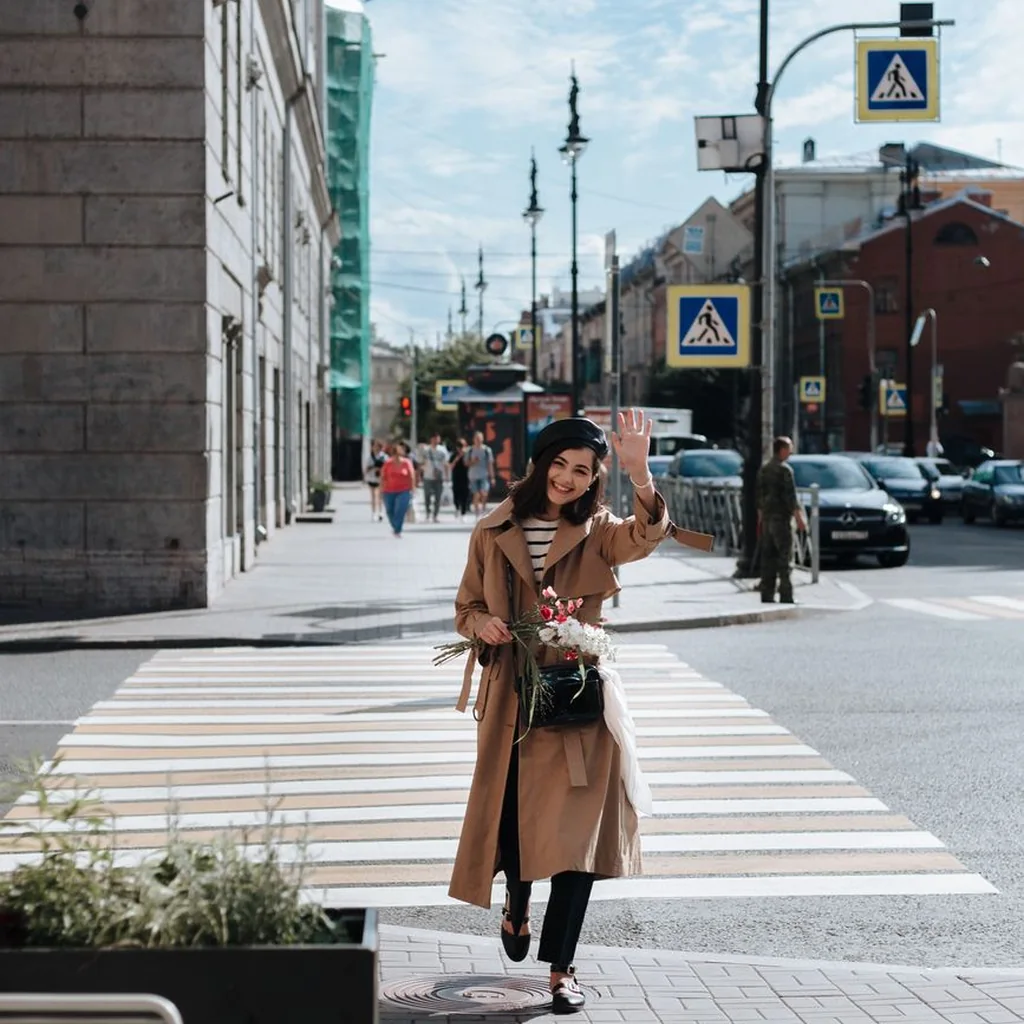
Photo: cottonbro studio on Pexels
The Woman Across the Street
Olivia enthusiastically waves back at an unfamiliar woman across a busy street, then must keep talking when the woman approaches.
Three short parts. Read each part once for the main idea, then check the key words explained below the story.


Part 1
Olivia spotted a woman waving from the other side of the street and waved back with both hands. The woman waved harder. Olivia, not to be outdone, lifted her coffee in salute and sloshed some onto her sleeve.
Only when the lights changed and the woman stepped off the kerb did Olivia realise she had absolutely no idea who she was.
There was still time to look behind her, which she did. A man in a cycling helmet was studying the bus timetable; a little girl was trying to sit on a bollard. Neither looked remotely interested in an enthusiastic greeting.
The woman reached her, smiling. “Well, this is nice.”
“It is,” Olivia said, with the conviction of someone desperately buying time. Up close, the woman’s face remained stubbornly unfamiliar; not even a flicker of recognition came to her rescue.
“I wasn’t sure you’d recognise me,” the woman said.
Olivia glanced at the wet cuff of her coat. “I did go a bit overboard, didn’t I?”
“Just a bit.” The woman laughed, then waited, as if Olivia might care to shed some light on the matter.
Olivia could have said she’d mistaken her for someone else. Instead, she heard herself ask, “How have you been?”
“Better, now the kitchen’s finished. Though I’m still finding dust in places I didn’t know I had.” She tilted her head. “You have no idea who I am, do you?”
Olivia opened her mouth. The woman held up a hand. “Wait. Let me guess who you think I am.”
Part 2The Wrong Wave
“Someone from work?” the woman asked. “A neighbour? Your old dentist, minus the mask?”
“I was hoping you’d go first,” Olivia said. “I don’t think we’ve met.”
The woman stared at her, then looked back across the street. “Oh, brilliant. I was waving at the man behind you. Cycling helmet, miserable expression?”
Olivia turned. The man had disappeared from the bus stop, taking the timetable and its considerable powers of attraction with him, as far as she could see.
“My brother,” the woman said. “I told him I’d meet him outside the bakery. I thought he’d seen me, and then you started waving like you’d won the lottery.”
“I thought you were waving at me! What was I supposed to do, leave you hanging?”
“Apparently not. I’m Amara, by the way.”
“Olivia. Sorry about your brother.”
“He’ll survive. He’s probably gone in to get out of the cold.” Amara pointed to the bakery behind them, where a queue had formed inside the window. “Come on. I’ll introduce you to the man who started all this by not paying attention.”
Olivia hesitated. “I should probably let you get on. You’ve only just found me, and I wasn’t even the one you were looking for.”
“Nonsense. He owes you an apology and I owe you a napkin.”
Inside, the smell of warm bread reminded Olivia that she’d skipped lunch. Amara handed her a napkin from the counter, then scanned the queue, peering past a display of enormous meringues.
“There he is,” she said. “And he’s wearing the scarf I spent all last night knitting him.”
Part 3The Yellow Scarf
The scarf was bright yellow and wide enough to double as a picnic blanket. Amara’s brother had wound it twice round his neck, leaving one end trailing nearly to his knees.
He caught sight of them and pulled it up over his chin. “Before you say anything, I like it.”
“You look like a caution sign,” Amara said.
“You said it would be warm.” He tugged at the scarf. “I was waving at you, by the way. Then the bus pulled up and I lost sight of you both.”
Amara introduced Olivia and explained what had happened. He listened, his eyes creasing above the yellow wool.
“So you two have never met,” he said, “and you’ve already had a longer conversation than we did at Christmas.”
“We had a lovely conversation at Christmas,” Amara said.
“You asked me to pass the potatoes.”
“And you did. Nobody fell out.” She gave the scarf an approving pat. “A triumph, by family standards.”
The queue shuffled forward. Olivia ordered a sandwich, and Amara’s brother insisted on paying for it, despite Olivia’s protests and her attempt to get her card to the reader first.
“Compensation,” he said. “For the coffee and the emotional labour.”
Outside, Olivia took a bite while Amara picked a loose thread off the scarf. Her brother stood still for the inspection, sandwich in hand, looking as resigned as a man who had been through this sort of thing before.
At the crossing, they said goodbye. Olivia gave them a small, careful wave; Amara responded with both arms in the air, and Olivia nearly dropped her lunch waving back.
Practise this English story
Vocabulary in context
Important words and phrases
not to be outdone
phraseMeaning: trying to match or beat what someone else has just done
He raised his offer, and, not to be outdone, she raised hers too.
with the conviction of someone desperately buying time
phraseMeaning: in a way that sounds certain even though the speaker is really stalling
She answered with the conviction of someone desperately buying time.
a flicker of recognition
phraseMeaning: a very small sign that you remember someone or something
There was a flicker of recognition in his eyes.
go a bit overboard
phraseMeaning: do more than is sensible or necessary
I may have gone a bit overboard with the decorations.
shed some light on the matter
phraseMeaning: help make something clearer
Could you shed some light on the matter?
leave you hanging
phraseMeaning: fail to answer or respond when someone expects you to
I won't leave you hanging; I'll call tonight.
emotional labour
noun phraseMeaning: the work of managing other people's feelings and keeping things smooth
Customer service can involve a lot of emotional labour.
come to her rescue
phraseMeaning: help her at the moment she needs it
A spare charger came to her rescue.
by family standards
phraseMeaning: when judged by what is normal for this particular family
A quiet dinner counted as a success by family standards.
considerable powers of attraction
noun phraseMeaning: a strong ability to attract attention
The bakery display had considerable powers of attraction.
a caution sign
noun phraseMeaning: something bright or obvious that warns people or gets attention
That jacket makes him look like a caution sign.
Check your understanding
Comprehension questions
Choose an answer, check it, then move to the next question.
Question 1 of 3
- Question 1: current not answered
- Question 2: not answered
- Question 3: not answered
Notice the language
Language notes
not to be outdone
Use not to be outdone before a clause to show that someone responds by trying to match or exceed what another person has done. It often sounds playful or competitive. Example: 'He raised his bid, and, not to be outdone, she raised hers again.' The phrase is often set off by commas and can appear at the start or in the middle of a sentence.
He raised his bid, and, not to be outdone, she raised hers again.
More English stories to read next

Ben and the Midnight Countdown
On New Year’s Eve, eight-year-old Ben wants to stay up until midnight, but his mother says it is too late for him.

The Gap Between the Claps
At a school concert, Mia joins the audience clapping along to a song but keeps clapping in the gap between everyone else’s beats.
The Sandwich Mix-Up
At the office, Jacob bites into a spicy chicken sandwich from the fridge and realizes it is not the cheese-and-pickle lunch he made.

The Posture Leaflet
At his desk, Matthew feels another twinge in his back and reads the posture leaflet he had used to prop up his monitor.