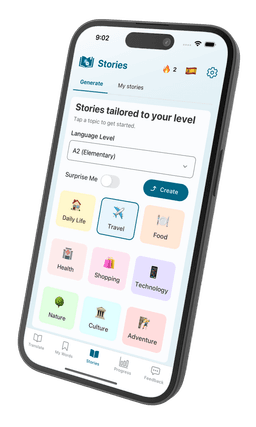
You're reading free stories on our website. Get the mobile app for audio narration, speaking practice, vocabulary saving, personalised stories, instant translations, and progress tracking.



📖 You are reading the free text version. Get our mobile app for 🎧 audio narration, 💬 speaking practice, 🔄 instant translations, and 💾 vocabulary saving to enhance your learning experience.
No one noticed the slow steady ticking of the old clockshop on Morton Street, except Henry, the clockmaker, who had counted every breath as carefully as every gear for decades.
Henry’s world was a quiet one filled with tiny mechanisms and precise moments captured inside brass and glass. But recently, the rhythm that had always measured his life seemed to falter. The days found him winded by simple chores, his breath shorter though his spirit remained restless.
He avoided doctors, convinced his heart was just tired, not broken. Instead, Henry began to note changes — the air seeming thicker, sounds duller, time itself slipping oddly between ticks.
Rather than panic or seek immediate fixes, Henry chose a different path. He turned inward, spending hours more than usual by his bench, assembling clocks with a patience that was new, accepting imperfections in the timing.
Each clock was a story of resilience, settings never quite perfect yet still beautiful. The flutters in his chest became another beat, a reminder that life doesn’t always keep perfect time.
On quiet mornings, Henry would open his shop’s windows, breathing in deep the city’s muted stir, feeling small and connected. The world outside moved, unhurried and unknowing of his silent struggle.
There was no miraculous recovery, no grand epiphany. Instead, Henry made peace with his limits, finding strength in fragility and grace in slowed moments.
The clocks still ticked, sometimes out of sync, sometimes with a steady pulse. And Henry, too, moved with them — learning that some rhythms, even the faintest, hold a quiet dignity worth honoring.
Use the mobile app for audio, speaking practice, instant translations, vocabulary saving, and progress tracking.